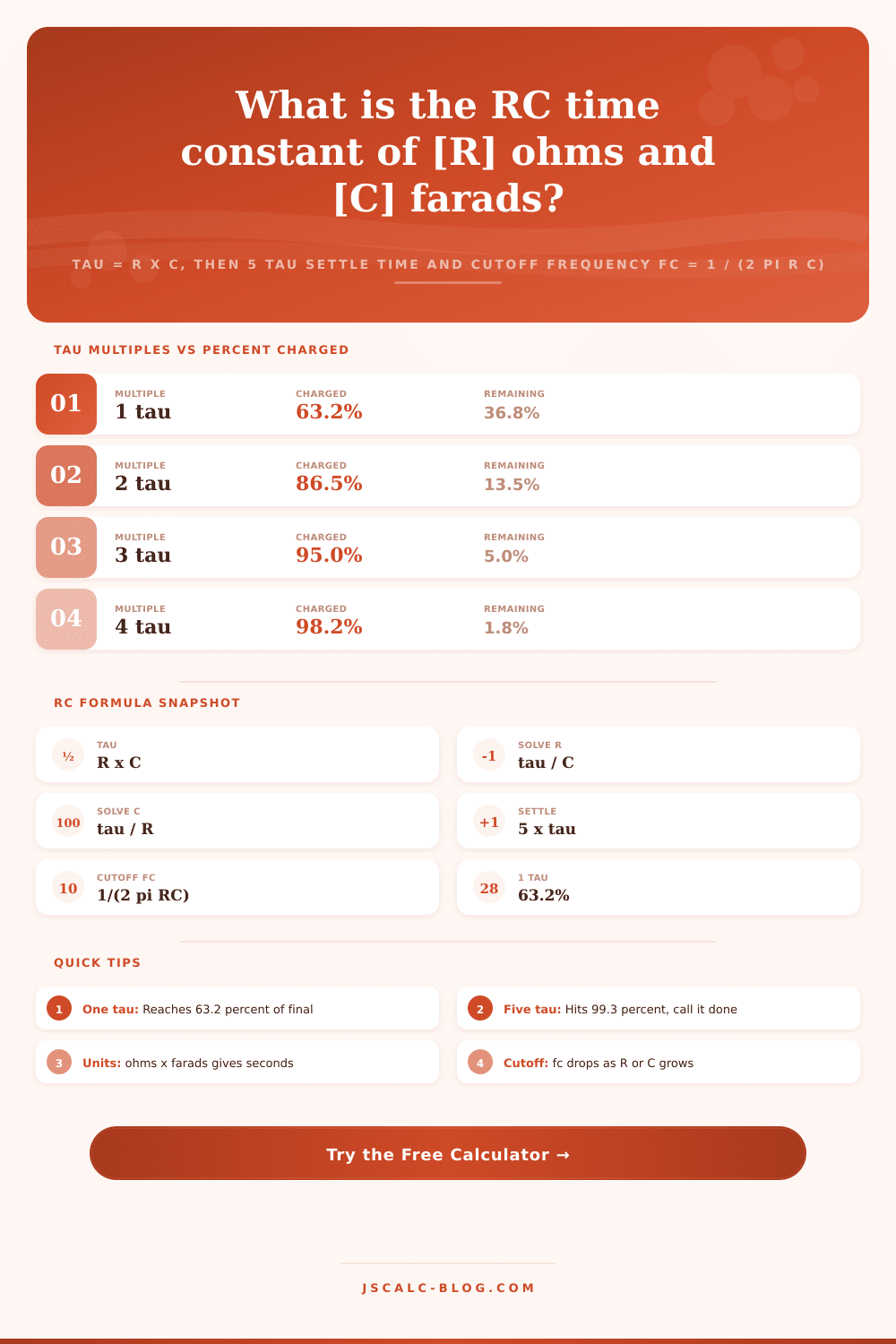
RC Time Constant Calculator: Tau, Cutoff Frequency and Settle
Enter your cap and resistor values into the RC time constant calculator and it will tell you what time constant (tau) are. But more importantly, … Read More

Tech and electronics calculators covering Ohm’s law, resistor color codes, data storage and transfer, bandwidth and screen resolution. For makers, IT folks and hardware tinkerers.
Tech and electronics calculators covering Ohm’s law, resistor color codes, data storage and transfer, bandwidth and screen resolution. For makers, IT folks and hardware tinkerers.
Enter your cap and resistor values into the RC time constant calculator and it will tell you what time constant (tau) are. But more importantly, … Read More
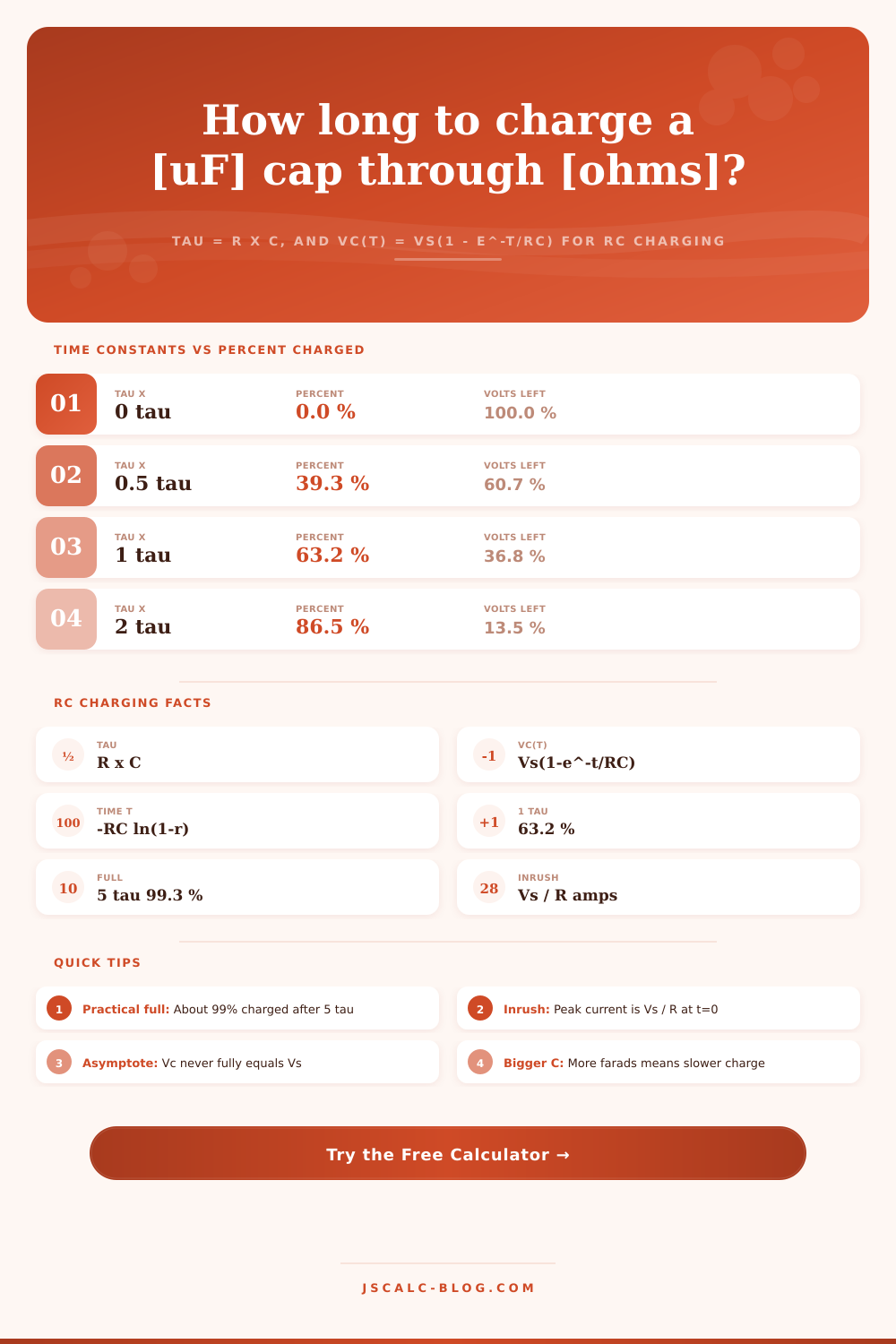
Here’s the calculator for computing how long a capacitor takes to charge up. Plug in some values and the tool will show you which volts … Read More
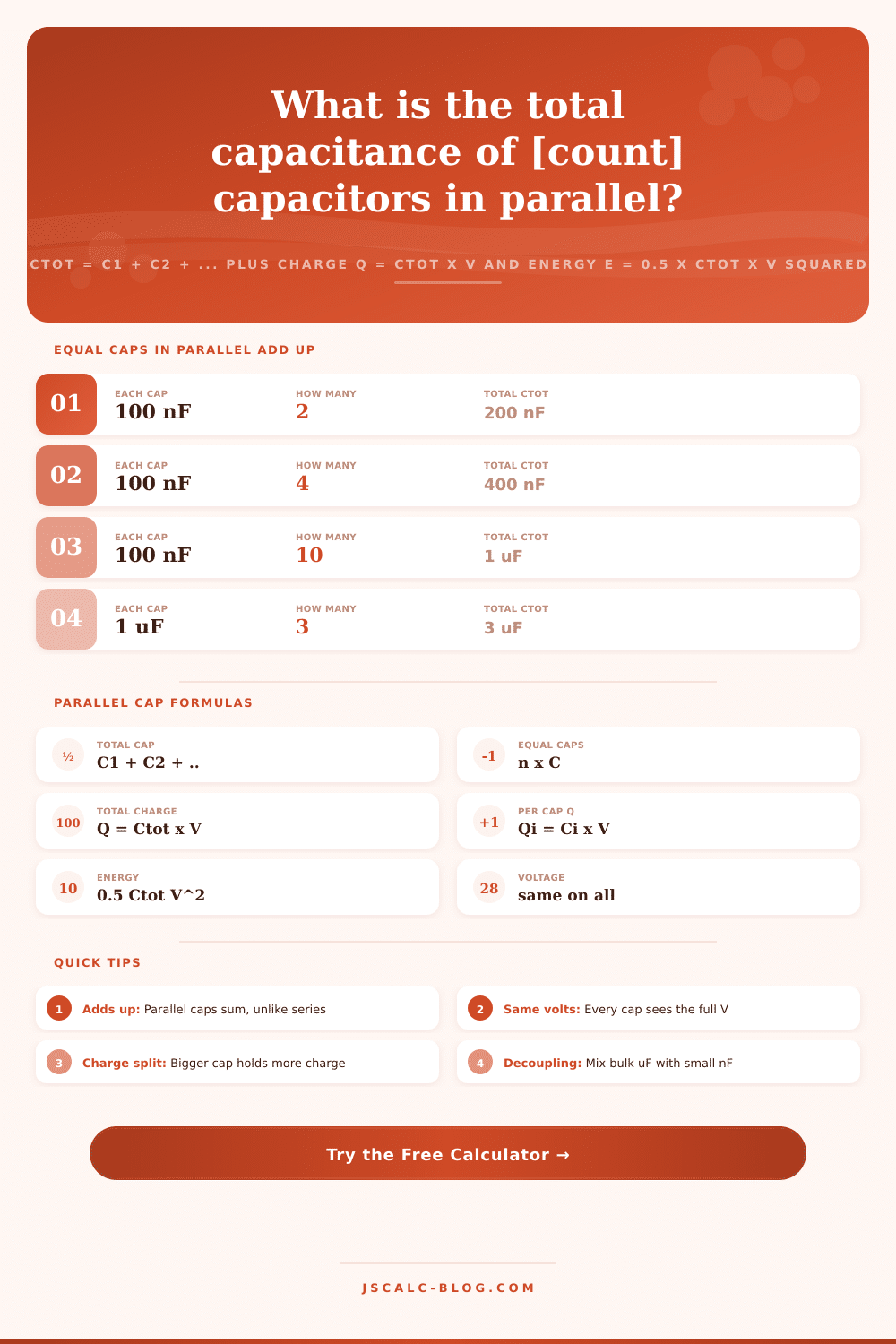
Capacitor add-in math seems like it would be easy; just plug numbers into a formula, done. But wiring them up one way or another make … Read More
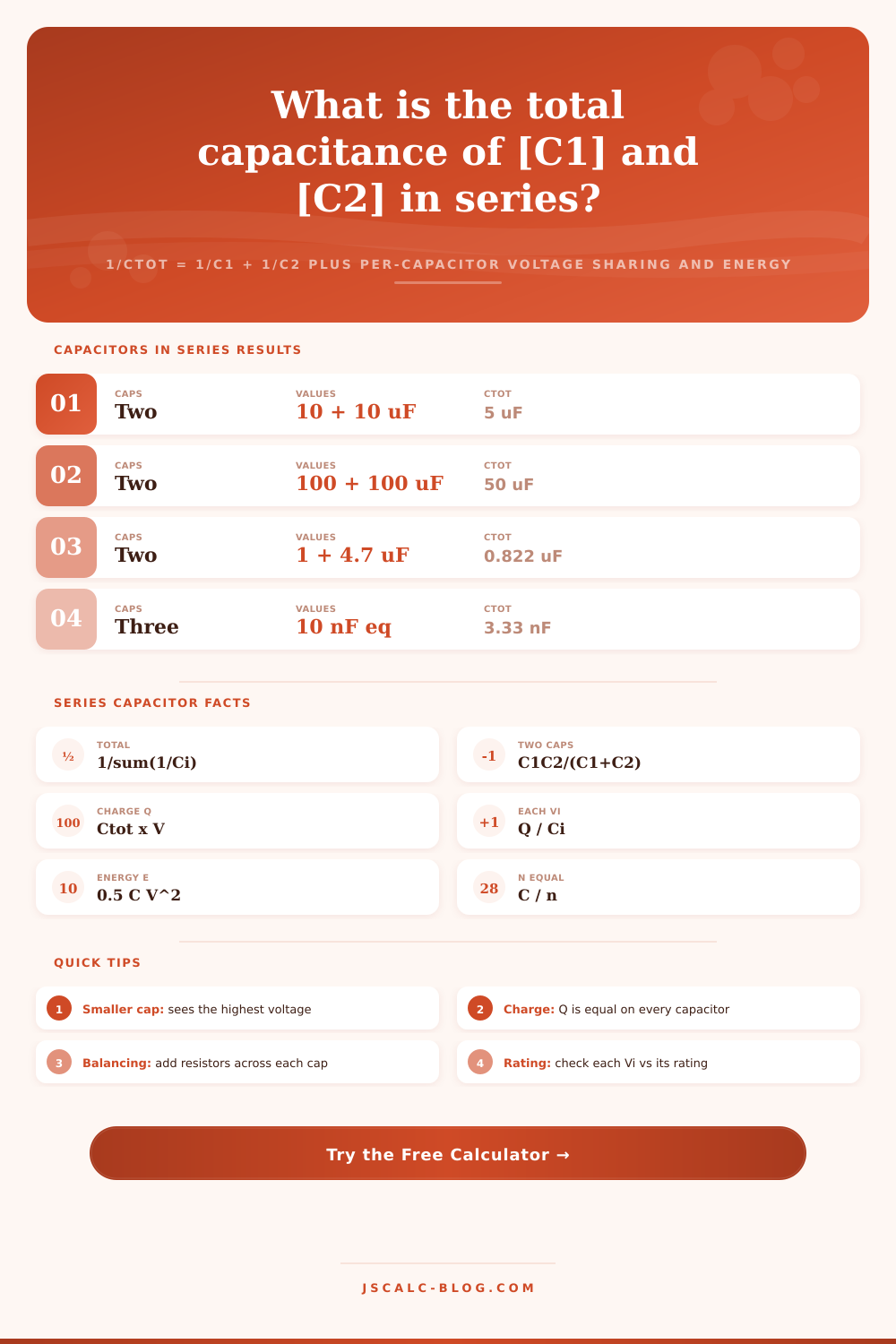
If you’re accustomed to working with resistors, wiring capacitors in series seems…wrong. When you put resistors end to end, they adds up linearly. Capacitators? No … Read More
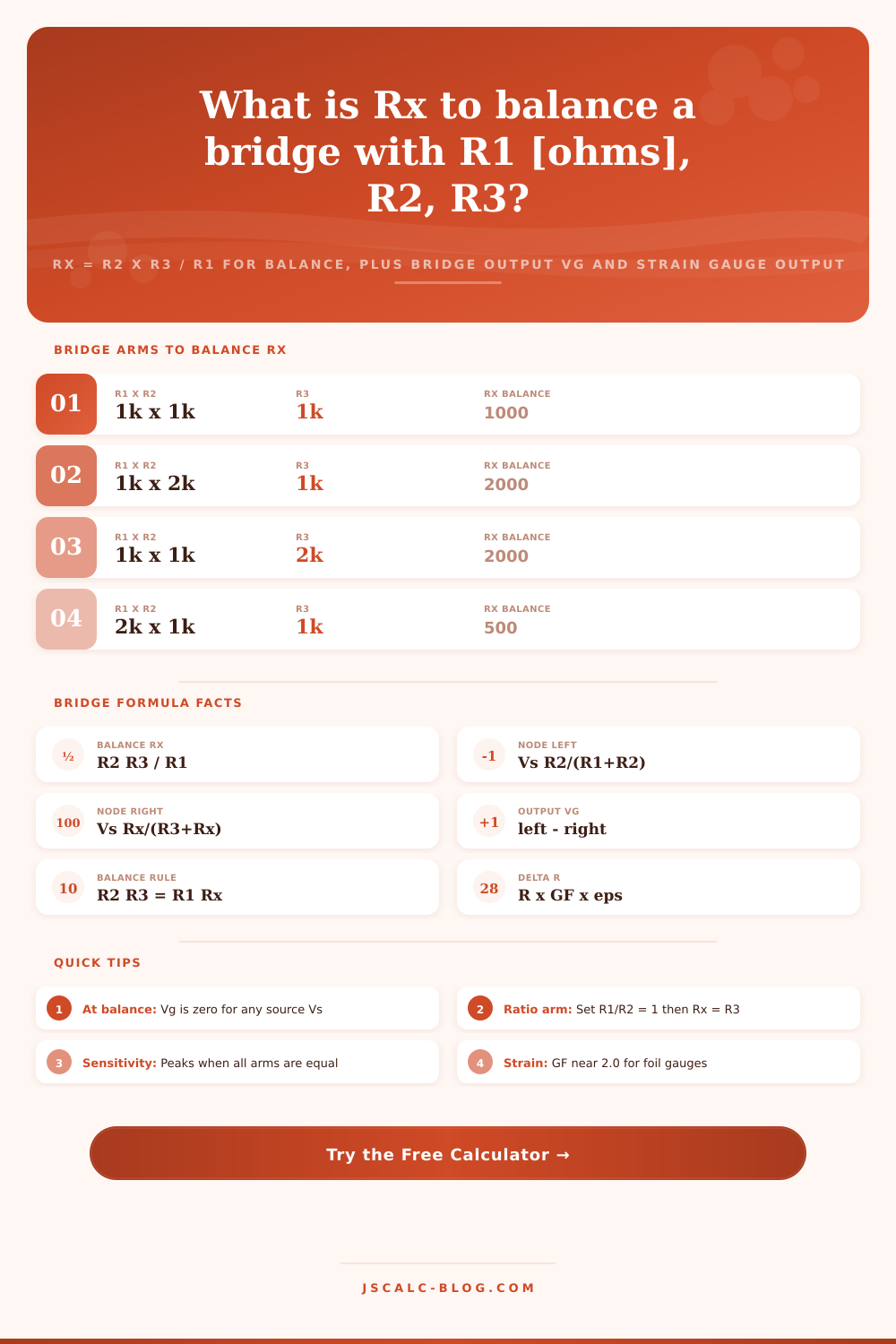
On paper, the Wheatstone bridge looks straightforward, but as always, good engineering matter. Essentially, it’s a pair of voltage dividers connected in parallel, but that … Read More
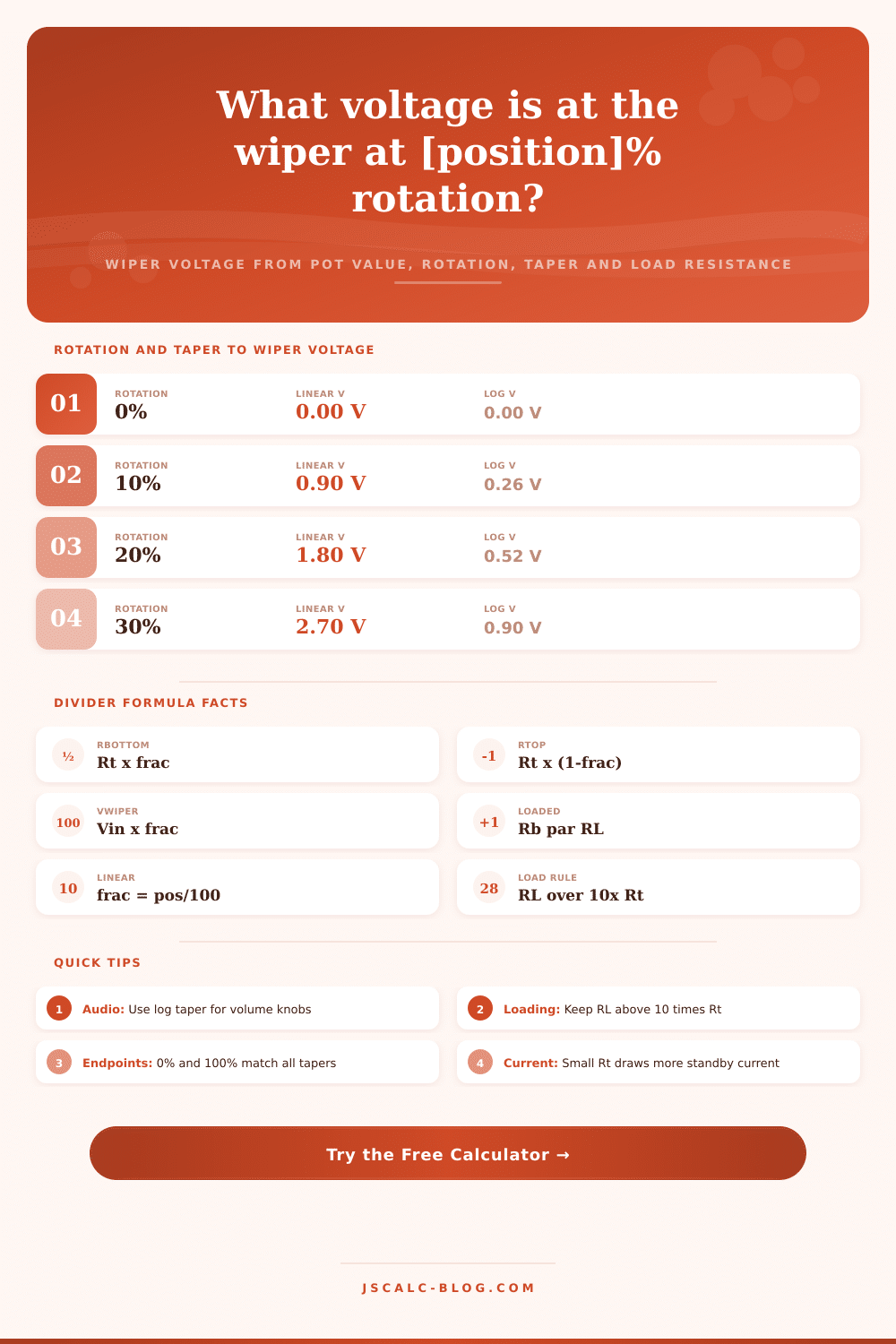
When you twist a volume knob, you want the sound to gradually grow from barely audible to ear-splitting loud. But instead, it’s completely silent until … Read More
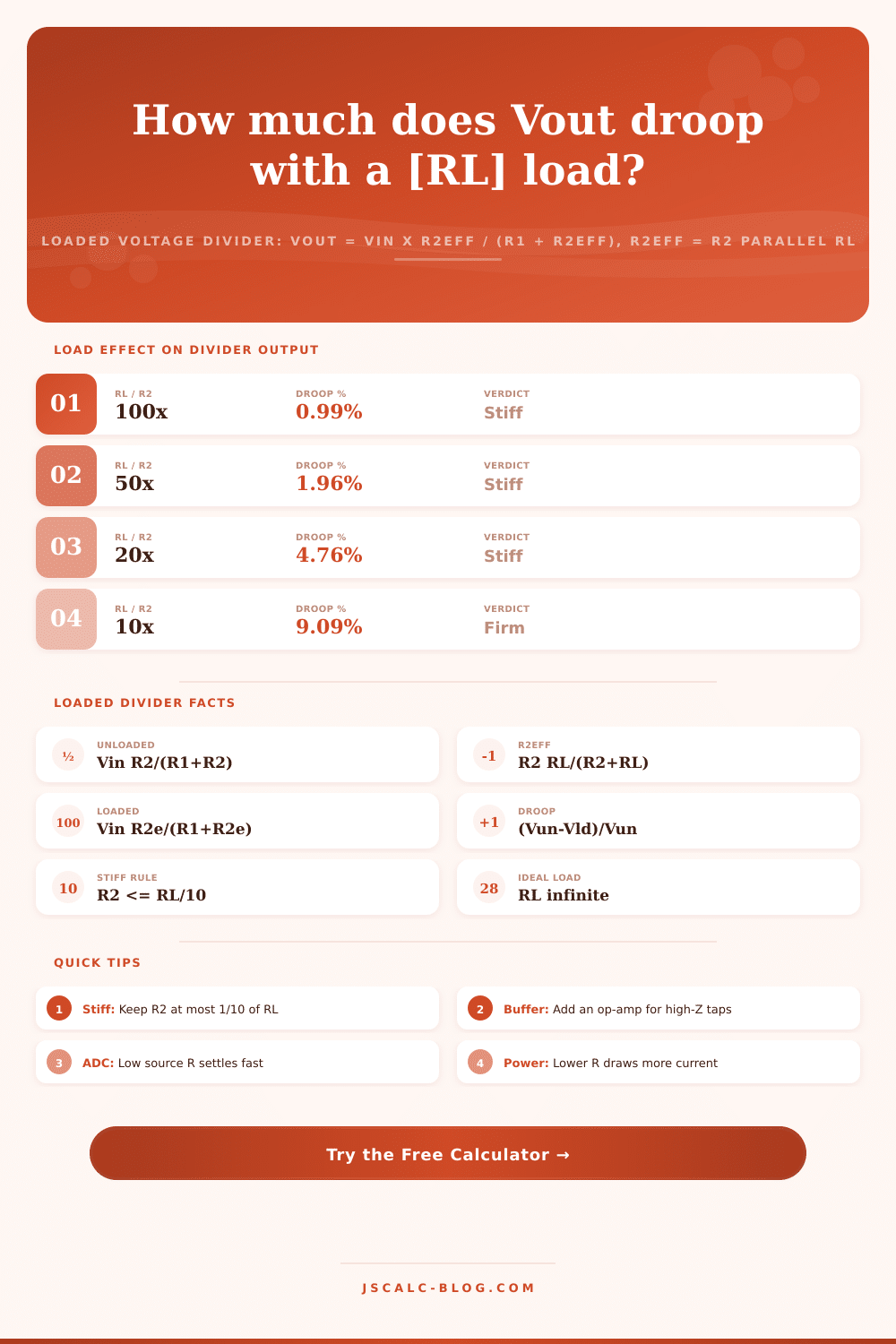
On paper, a voltage divider appears straightforward: Two resistors in series and the output equals Vin times R2 over the total resistance (R1 + R2). … Read More
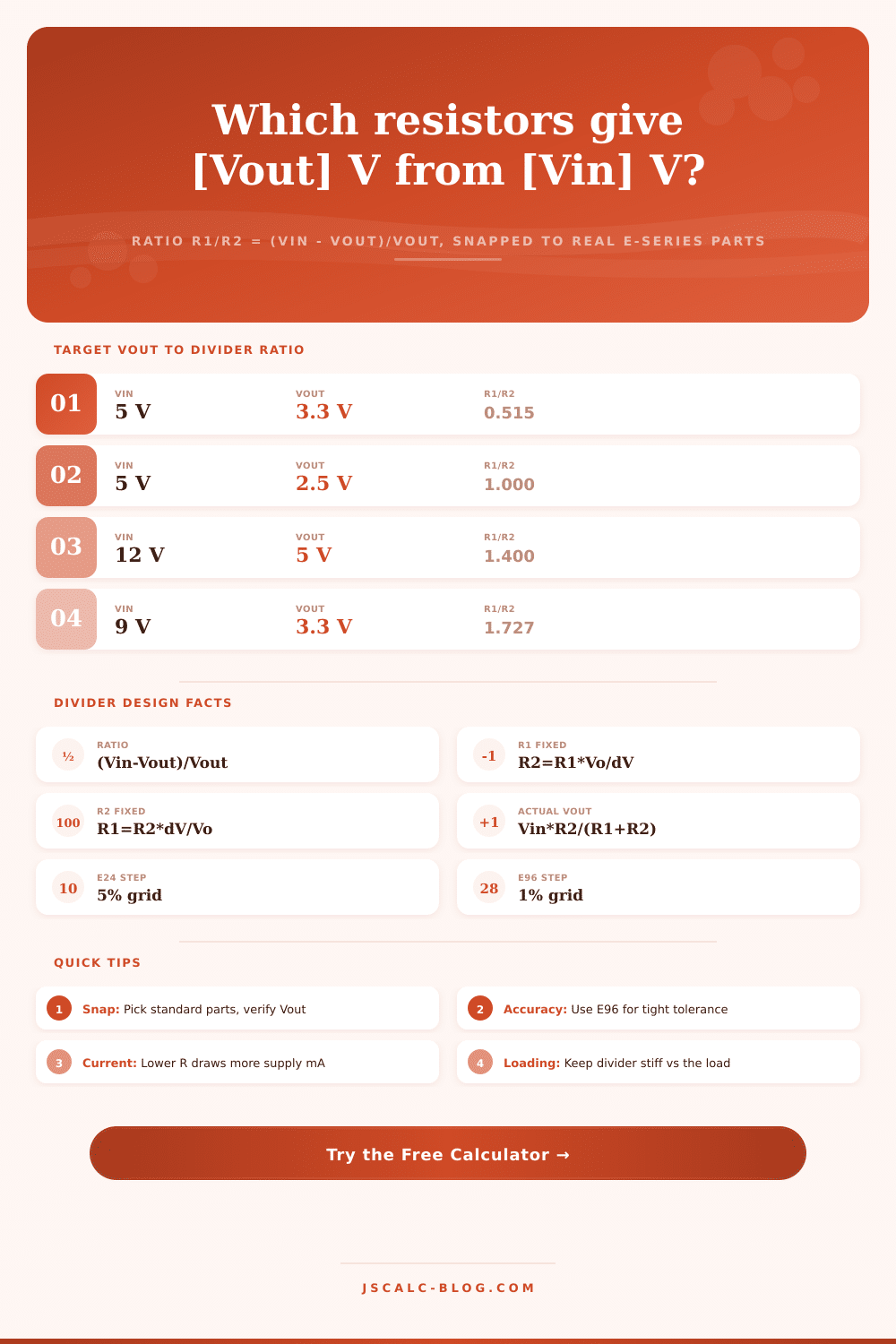
Voltage dividers are simple things: they’re just two resistors in series that reduce a high voltage to a low one. A well-designed divider is not … Read More
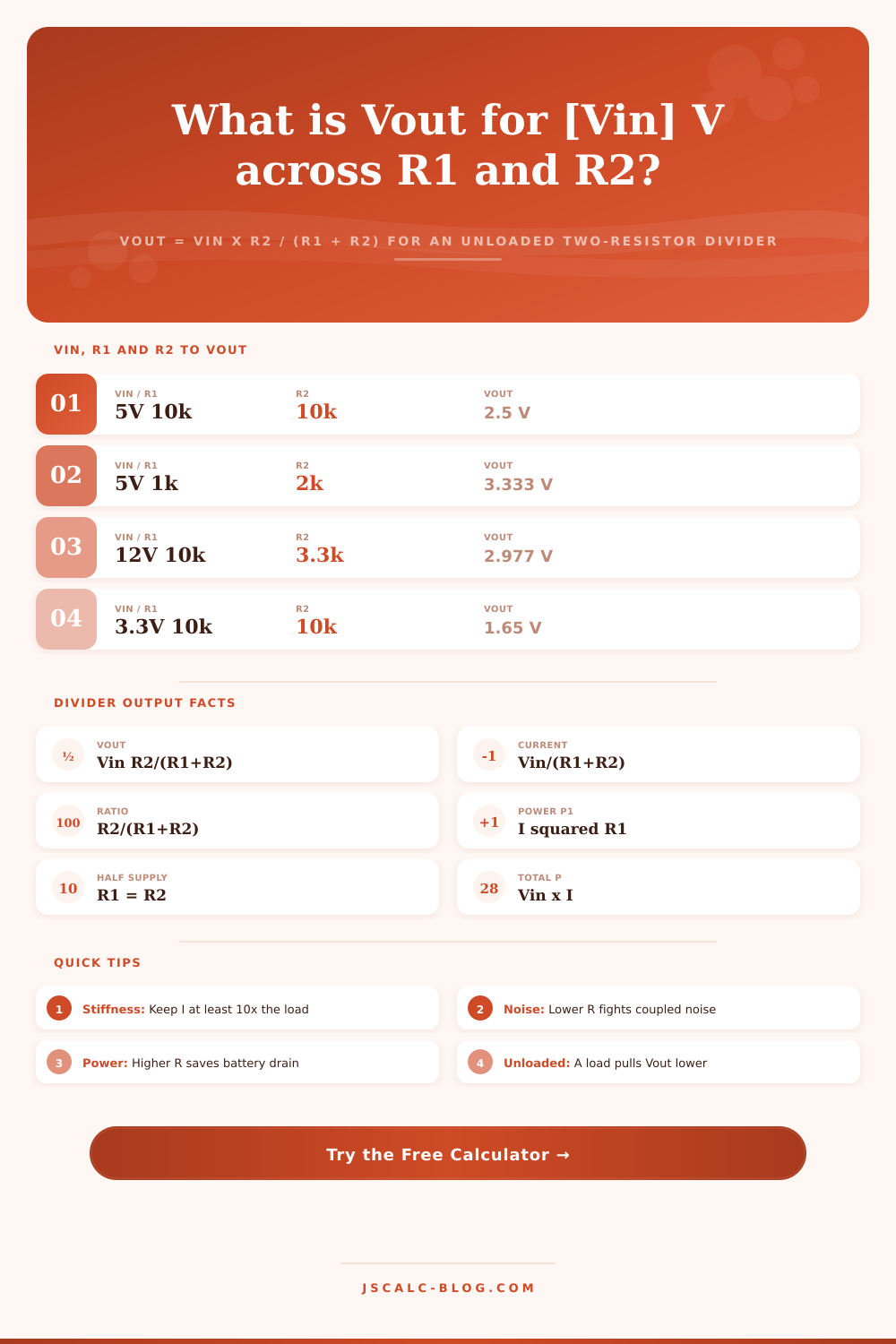
Alright, I’ve got this five-volt logic signal that I need to tap into a three point three volt microcontroller input pin. What do I do? … Read More
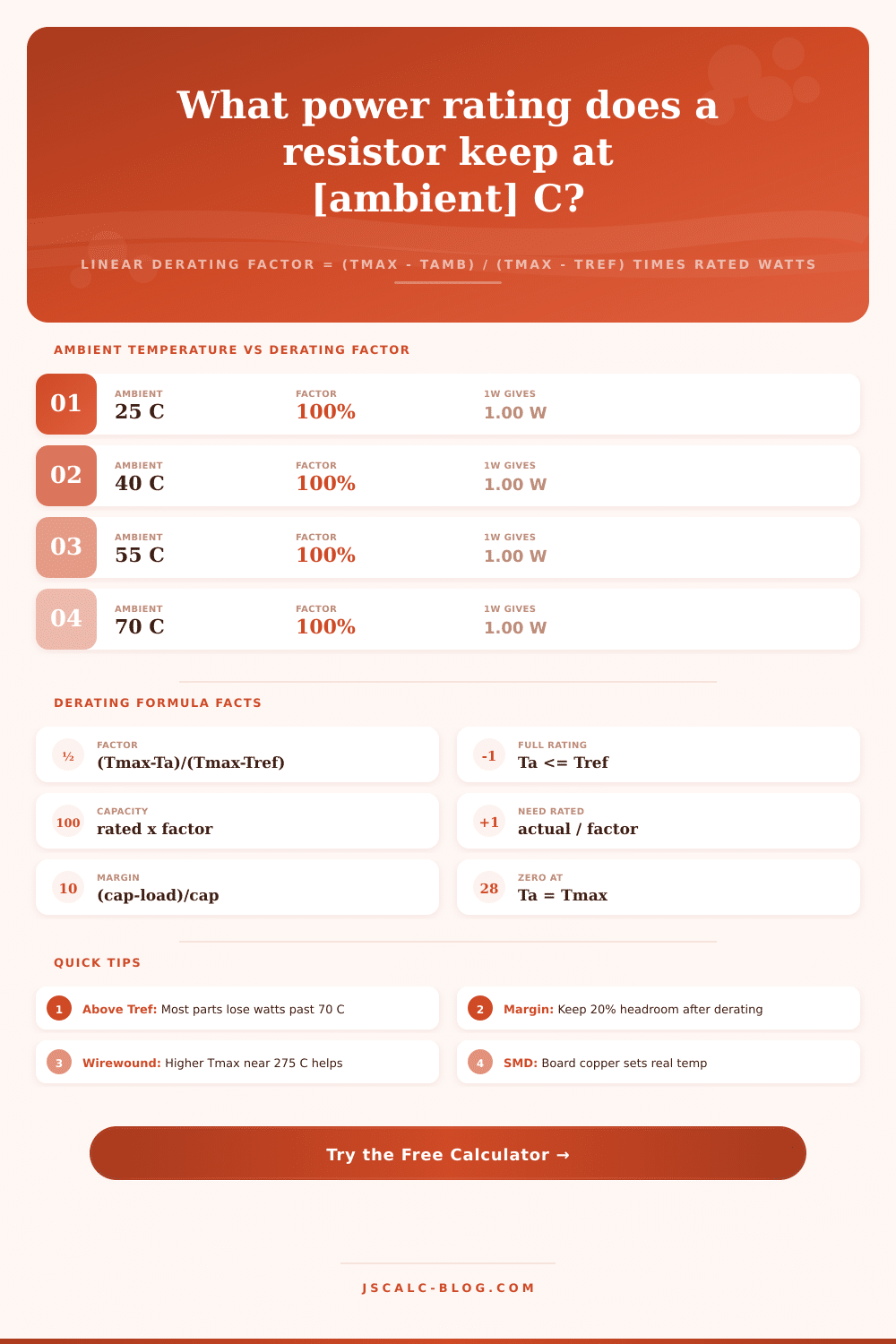
A quarter-watt rated resistor doesn’t do a quarter watt in all environments. The quarter-watt rating is what manufacturer promises under 70 degrees Celsius (or whatever … Read More