Thin Brick Mortar Calculator
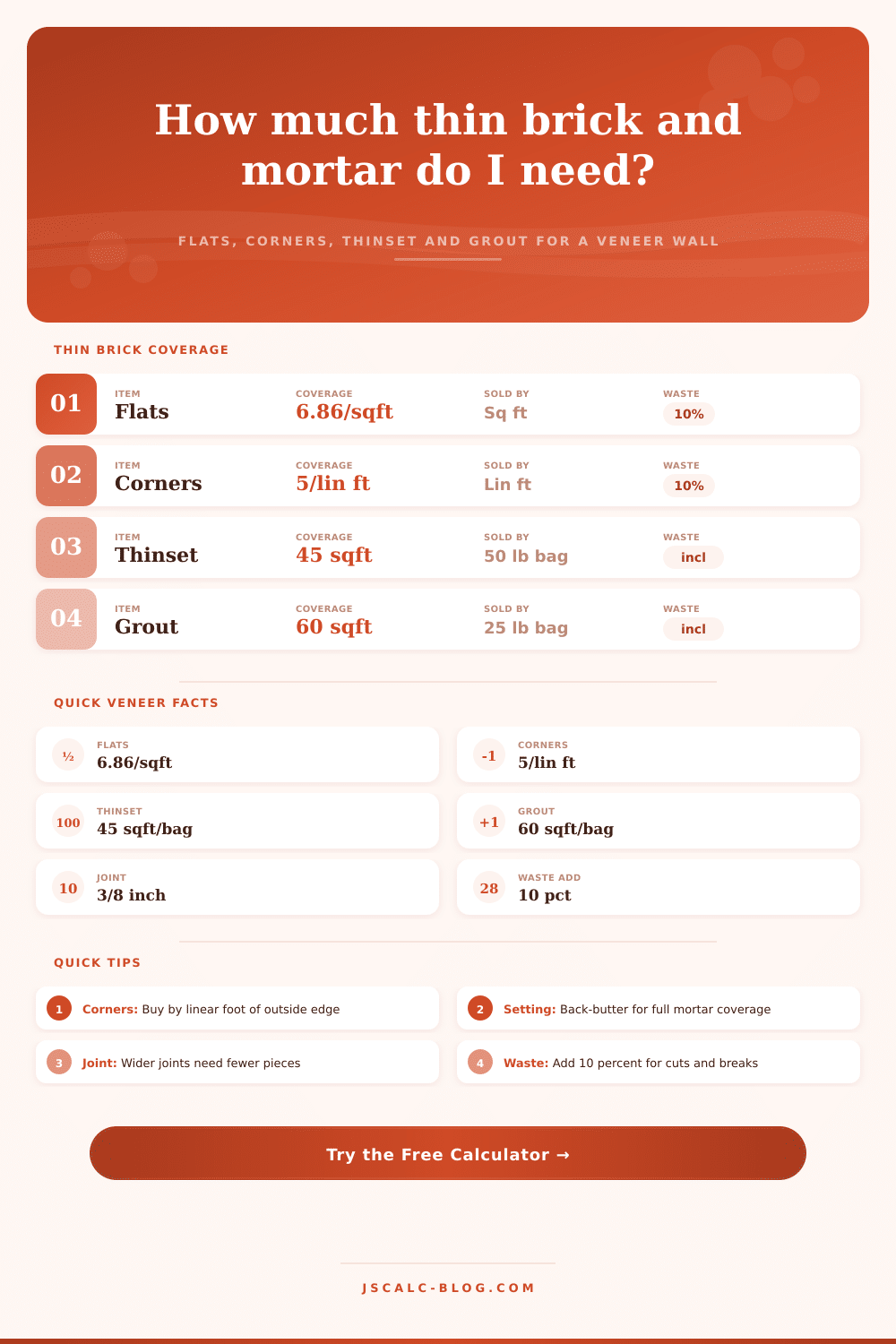
Estimate flat pieces, outside corner pieces, thinset or mortar bags, and grout bags for a thin brick veneer wall based on area, outside corner length, joint width, and waste allowance.
🧱Real Project Presets
📝Wall & Material Inputs
Used when method is area directly.
Doors, windows, or gaps not veneered.
Total run of all outside corners.
Used when size is custom pieces.
Enter carton size to round up to full boxes.
🔢Coverage Snapshot
🧱Thin Brick Coverage Reference
| Thin Brick Size | Nominal Face | Joint | Flats / Sq Ft | Corners / Lin Ft |
|---|---|---|---|---|
| Modular | 2 1/4 × 7 5/8 in | 3/8 in | 6.86 | 5.0 |
| Modular (tight) | 2 1/4 × 7 5/8 in | 1/4 in | 7.30 | 5.3 |
| Queen / Engineer | 2 3/4 × 7 5/8 in | 3/8 in | 6.14 | 4.3 |
| King / Norman | 2 3/4 × 9 5/8 in | 3/8 in | 5.10 | 4.3 |
| Utility oversize | 3 5/8 × 11 5/8 in | 3/8 in | 3.00 | 3.3 |
🪣Thinset & Grout Coverage
| Material | Bag Size | Trowel / Joint | Coverage | Notes |
|---|---|---|---|---|
| Thinset mortar | 50 lb | 1/4 in notch | 40–50 sq ft | Back-butter lowers coverage |
| Thinset mortar | 50 lb | 1/2 in notch | 30–40 sq ft | Rough or uneven substrate |
| Polymer mortar | 50 lb | 1/4 in notch | 45 sq ft | Exterior rated blend |
| Sanded grout | 25 lb | 3/8 in joint | 55–70 sq ft | Wider joints use more |
| Mortar joint bag | 25 lb | 1/2 in joint | 35–45 sq ft | Struck brick joint look |
📏Joint Size Effect on Pieces
| Joint Width | Flats / Sq Ft | vs 3/8 Baseline | Grout Use | Best For |
|---|---|---|---|---|
| 1/8 in | 7.55 | More pieces | Low | Tight modern look |
| 1/4 in | 7.30 | Slightly more | Low | Clean interior wall |
| 3/8 in | 6.86 | Baseline | Medium | Classic brick joint |
| 1/2 in | 6.40 | Fewer pieces | High | Rustic mortar look |
| 5/8 in | 6.05 | Fewest pieces | Highest | Old-world overgrout |
🗂Area vs Materials Comparison Grid
| Wall Area | Flats (10% waste) | Corners (10 lin ft) | Thinset Bags | Grout Bags |
|---|---|---|---|---|
| 25 sq ft | 151 | 56 | 1 | 1 |
| 50 sq ft | 340 | 56 | 2 | 1 |
| 75 sq ft | 529 | 56 | 2 | 2 |
| 100 sq ft | 717 | 56 | 3 | 2 |
| 150 sq ft | 1,095 | 56 | 4 | 3 |
| 200 sq ft | 1,472 | 56 | 5 | 4 |
| 300 sq ft | 2,227 | 56 | 7 | 5 |
| 400 sq ft | 2,981 | 56 | 9 | 7 |
⚙Full Formula Breakdown
📋Prep & Order Guidance
| Step | What To Check | Rule Of Thumb | Why It Matters |
|---|---|---|---|
| Measure wall | Length, height, openings | Subtract full openings | Avoids over-ordering flats |
| Find corners | Outside vertical edges | Sum every corner run | Corners are priced per lin ft |
| Pick joint | Joint width and look | 3/8 in is the norm | Sets pieces and grout use |
| Set mortar | Notch size, substrate | 45 sq ft per bag base | Rough walls use more thinset |
| Add waste | Cuts, breakage, blend | 10% flat, 15% complex | Keeps dye-lot pieces on hand |
💡Practical Veneer Tips
When most folks think “brick wall,” they picture a solid heavy structure sunk deep into building’s foundation. Thin brick veneer provide the appearance of masonry but it isn’t structurally sound (nor does it take as long to install). It feels like real clay brick warmth and texture on walls only inches thick. Because there’s no mortar bed to cover mistakes under, precision is more important then with full-size brick work.
Careful measurement is essential: how much do you need? Estimate your materials accurate before you even mix a bag of thinset. A calculator will make sure the materials you plan to use actualy fit in your truck.
How to Plan Your Brick Veneer Project
What is the first thing to consider? What will the face of that brick be? Most common residential builds uses modular bricks, the ones whose proportions seem natural on a brick wall, but if you want it to look bigger you may opt for King or even Queen sizes. Larger bricks mean there are fewer per square foot. This makes a big difference in number of units you’ll be using. The corners will also vary. Larger bricks usually offer other corner options, too.
Outside corners requires separate pieces since they wrap around two faces. Don’t forget to include these in your initial calculation, either. It’s all too easy to ignore them and then run out just when you really need one. Once you enter your total linear footage, the tool figures out the rest for you. You won’t have to guess how many L-shaped trim pieces you need for your flat sections.
There’s also one little thing that changes scope of the whole project: Joint width. The narrower quarter inch width look tighter and moddern. But it means more exact cuts and less margin for error with the level. Wider (three-eighths or even half inch) appears rustic, traditional, and really helps since there’s more mortar between bricks, which in turn saves on total brick purchases. And here’s where it directly impacts your grout usage: wider equals more material per sq ft. It is one of those little things that matter when you’re carrying bags up a ladder.
Amateurs burn themselves on waste allowance. When it comes to brick veneer, there are sections cut around rough wall edges, irregularities, windows, electrical outlets, etc. You order precisely as many as required by your calculations, then suddenly find yourself with only one full brick in the box but you need two more. Ten to fifteen percent waste allow for completing the project using same dye lot so you don’t have to wait for a new delivery. It’s also insurance against breaking some off while carrying them around onsite (yes, this happens).
Next, consider amount of adhesive and grout that will be required. The amount one fifty-pound bag of thinset mortar yields vary based off the size of the trowel notch and the texture of the surface. Rougher surfaces like stucco require more filling power than smoother ones such as a concrete block wall). Using back buttered bricks increase the strength of the bond, but also decreases the amount of mortar used per bag. Wider joints is similar to grout; they require more volume. Rather than assuming an average amount from any sources, the reference table clearly spells it all out and helps you adjust based on your particular conditions.
Don’t get frustrated! To avoid being totally disappointed later, take time to check for a flat wall. Thin veneer makes any bumps in existing wall structure really noticeable. You’ll either end up with sloppy-looking uneven joints or waste hours forcing bricks to fit where they don’t want to go., Level the surface first: if your wall is out of plumb, you’ll spend hours trying to jam bricks into position. Don’t skip this step!
You should of accurately measure openings and then deduct this value from your total area when buying flats. Sounds obvious, but many people forget that a window frame eats up square footage that will never be covered by brick.
Thin brick is beautiful, because it’s accessible. If you’re methodical and have a bit of patience, you can do this yourself. Planning the material haul (avoiding multiple trips to the supply yard) is probably the most difficult aspect. Once you know how many bags of mortar, flats, and corners you’ll require, the project becomes a simple matter of assembly, a puzzle that doesn’t feel quite so chaotic. You will spend less time worrying about shortages and more time enjoying the transformation of your space. That’s what makes this a manageable weekend task (instead of an intimidating renovation). Suddenly, the masonry look you craved comes with none of the headaches you dreaded.