Screw Torque Calculator
Estimate driving and seating torque for wood, machine, self-tapping, and drywall screws in inch-pounds and Newton-meters by screw gauge, material hardness, pilot hole, and thread engagement, plus a suggested driver clutch setting.
📌Real Screw Presets
🔧Screw and Material Inputs
Length of thread biting into the material.
🧮Estimate Basis
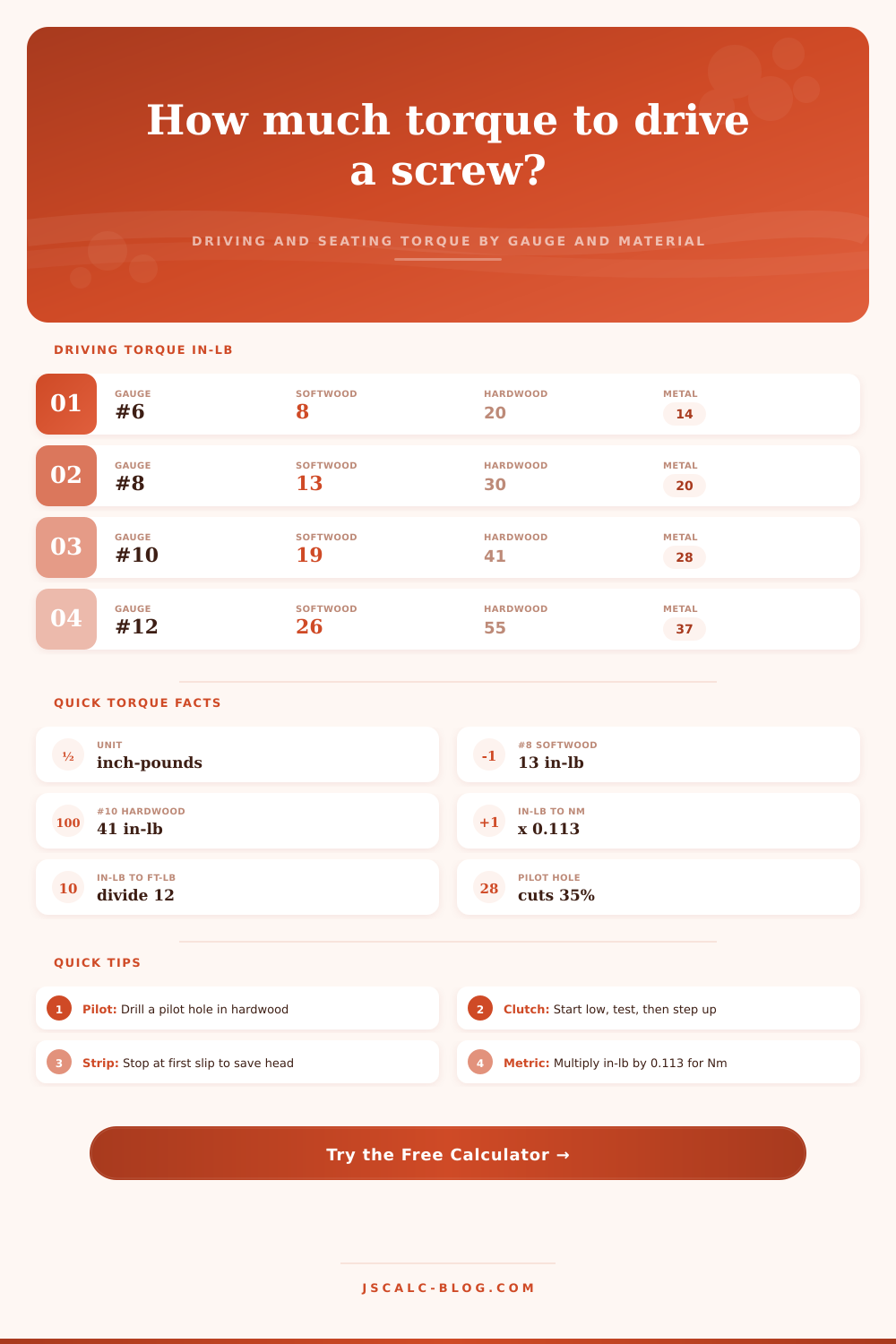
📊Driving Torque by Gauge and Material
| Gauge | Softwood | Hardwood | Plywood | Plastic | Sheet Metal |
|---|---|---|---|---|---|
| #4 (0.112 in) | 5 in-lb | 12 in-lb | 7 in-lb | 6 in-lb | 9 in-lb |
| #6 (0.138 in) | 8 in-lb | 20 in-lb | 12 in-lb | 10 in-lb | 14 in-lb |
| #8 (0.164 in) | 13 in-lb | 30 in-lb | 18 in-lb | 15 in-lb | 20 in-lb |
| #10 (0.190 in) | 19 in-lb | 41 in-lb | 26 in-lb | 21 in-lb | 28 in-lb |
| #12 (0.216 in) | 26 in-lb | 55 in-lb | 35 in-lb | 28 in-lb | 37 in-lb |
| 1/4 in (0.250 in) | 38 in-lb | 78 in-lb | 50 in-lb | 40 in-lb | 52 in-lb |
Values are typical seating torque with no pilot hole and about 1 inch of thread engagement. Drill a pilot in hardwood to lower these numbers.
📏Screw Gauge to Diameter
| Gauge | Major Dia (in) | Major Dia (mm) | Pilot Softwood | Pilot Hardwood |
|---|---|---|---|---|
| #4 | 0.112 | 2.84 | 1/16 in | 5/64 in |
| #6 | 0.138 | 3.51 | 5/64 in | 3/32 in |
| #8 | 0.164 | 4.17 | 3/32 in | 7/64 in |
| #10 | 0.190 | 4.83 | 7/64 in | 1/8 in |
| #12 | 0.216 | 5.49 | 1/8 in | 9/64 in |
| 1/4 in | 0.250 | 6.35 | 5/32 in | 3/16 in |
⚙Clutch Setting Guide
| Clutch Dial | Approx Torque | Best For | Notes |
|---|---|---|---|
| 1 – 4 | 4 – 12 in-lb | Small screws, soft wood | Trim, thin plastic, drywall |
| 5 – 8 | 12 – 22 in-lb | #8 general wood work | Cabinets, plywood, decking |
| 9 – 13 | 22 – 40 in-lb | #10 – #12 hardwood | Framing, dense woods |
| 14 – 18 | 40 – 60 in-lb | Large screws, oak | Watch for cam-out |
| 19 – 20 / Drill | 60+ in-lb | Lag screws, tough drives | Use pilot; risk of snap |
Clutch numbers are approximate; every drill brand differs. Always test on scrap and step up one setting at a time.
🔄Torque Unit Conversions
| Inch-Pounds | Foot-Pounds | Newton-Meters | Typical Use |
|---|---|---|---|
| 5 in-lb | 0.42 ft-lb | 0.56 N·m | #4 into softwood |
| 13 in-lb | 1.08 ft-lb | 1.47 N·m | #8 into softwood |
| 20 in-lb | 1.67 ft-lb | 2.26 N·m | #6 machine into metal |
| 35 in-lb | 2.92 ft-lb | 3.95 N·m | #10 into hardwood |
| 55 in-lb | 4.58 ft-lb | 6.21 N·m | #12 into hardwood |
| 78 in-lb | 6.50 ft-lb | 8.81 N·m | 1/4 in into hardwood |
Convert with 1 ft-lb = 12 in-lb and 1 in-lb = 0.113 N·m. Screw driving torque stays far below structural bolt torque, which is measured in ft-lb.
🧮Full Torque Breakdown
📋Screw Type Reference
| Screw Type | Common Use | Pilot Needed | Torque Note |
|---|---|---|---|
| Wood screw | Framing, decking, furniture | Yes in hardwood | Scales with gauge and wood |
| Machine screw | Metal into tapped hole | Tapped hole | Low, seating only |
| Self-tapping | Sheet metal, brackets | Sometimes | Cuts its own thread |
| Drywall screw | Gypsum board to studs | No | Very low, set flush |
| Lag screw | Heavy timber, ledgers | Always | Highest driving torque |
💡Practical Driving Tips
There’s some frustration driving screws into hardwood. You push down, turn…screw snaps in half. What is happening? It’s because you’re treating all materials like they’re soft pine. Cedar resists less then oak. Drywall isn’t the same as metal. To avoid damaging your hardware, know how much you need to rotate the screw. That’s where this tool comes in.
The tool above handles the heavy lifting by estimating the driving torque threshold based off the physical variables of your task: what kind of material are you screwing into? How hard is the material? What gauge are the screws? From there it spits out a recommended torque so you’re consistent with every screwdriver turn. The seams is even and the tightness is uniform. When you’re building decking or cabinetry, you’ll have joints that hold together secureley. One over torqued screw and one too loose can lead to warped or split wood down the line. With this calculator, you have a target setting for your drill clutch.
Why This Tool Helps You Drive Screws
The size does matter Most people don’t think about this when they are first starting out. A bigger diameter screw has more material in contact with whatever it’s screwed into. This creates more friction. You can see from the tables above that just because the screw moves up one number (from a #6 to a #8) doesn’t mean it will take twice as much torque. The effect actualy increases the further up you go. That’s why big lag screws seems so hard to turn compared to tiny screws.
Hardness is second primary variable in materials. Hardwoods takes twice as much torque to drive as softwoods. There’s greater friction on the threads because of their density. Expecting to drive a pine screw right through a piece of maple without adjusting your settings will result in stripped thread. Most folks complain about poor screws when, in truth, they just failed to account for the resistance of their material.
Making a good pilot hole changes everything completely. Reducing most of the displacement task cuts the required driving torque by about thirty-five percent. That’s what prevents splits in your wood and keeps your screw heads intact.
Another factor is depth of engagement. If the screw is biting into two inches of material it requires more force than if it was biting into half an inch. The calculator scales this as well. You can enter how long a piece of thread actualy engages with the material. That’s handy when using thick lumber or joining pieces on end so only a small portion of the screw is used.
Lubrication and finish are other minor but real tweaks. A waxed screw reduces friction drag, making it slide in easier. On the other hand, bare dry screws create more friction. Zinc coated screws is somewhere in between. These factors adjust the final number to show what happens in practice.
Drills have variable number settings on their clutches; each brand may be different. Setting five on one drill can be eight on another. Drills with conventional 1-to-20 dials give you an approximate range that the tool thinks works best, based on the type of screw you are using. That’s your start. But then check on some scrap first. Go low. Drive in a screw. Does it seat? If not, then go up on the clutch until it does. You don’t want to slip at all; the head of the screw will destroy itself, as well as any fibers in the wood.
It is better to under tighten a joint than to overtighten it; the fibers crush instead of being compressed, and the clamping power is lost. You should of checked the hardness first. Torque teaches you that screwdriving isn’t a guessing game anymore; it’s exact. It’s no longer just wrench-wrench-wrench, but measured force. Knowing when to back off can be what separates the loose hole from the tight joint. That restraint is what makes it look like a pro did the job.