Paint Coverage Calculator
Estimate finish paint, primer, waste allowance, rounded container purchases, and total coating cost for interior rooms, ceilings, trim, textured walls, and exterior siding.
Paint coverage results
| Surface or coating | Typical coverage | Adjustment factor | Typical coats | Best use |
|---|---|---|---|---|
| Smooth drywall repaint | 350-400 sq ft/gal | 1.00 | 2 finish | Clean interior walls with similar color |
| New drywall or patched compound | 250-325 sq ft/gal | 1.12 | 1 primer + 2 finish | Fresh board, skim coat, large repairs |
| Textured wall | 250-300 sq ft/gal | 1.18 | 2 finish | Orange peel, knockdown, heavy roller nap |
| Porous masonry or stucco | 150-250 sq ft/gal | 1.30 | 1 primer + 2 finish | Block, brick, stucco, thirsty exterior surfaces |
| Exterior siding | 300-350 sq ft/gal | 1.10 | 2 finish | Wood, fiber cement, vinyl-safe repaint |
| Trim enamel | 350-450 sq ft/gal | 0.95 | 1-2 finish | Baseboard, doors, casing, rails |
| Flat ceiling paint | 325-400 sq ft/gal | 1.00 | 1-2 finish | Ceilings with flat or matte coating |
| Primer or stain sealer | 250-350 sq ft/gal | 1.08 | 1-2 primer | Stains, odor sealing, color blocking |
| Container option | Gallons per container | Best range | Rounding behavior |
|---|---|---|---|
| Quart | 0.25 gal | Samples, doors, touch-ups | Rounds up to the next quart |
| Half gallon | 0.5 gal | Small trim or accent walls | Rounds up to the next half gallon |
| Gallon | 1 gal | Most rooms and ceilings | Rounds finish and primer separately |
| Five-gallon pail | 5 gal | Large rooms and exterior siding | Rounds up to full pails |
| Measurement item | Formula | Include when | Common deduction |
|---|---|---|---|
| Interior wall area | 2 x (length + width) x height | Painting all room walls | Doors and windows |
| Ceiling area | length x width | Painting ceiling separately or same color | Skylights or large openings |
| Manual area | Entered area | Hallways, exterior faces, partial walls | Known unpainted surfaces |
| Trim area | trim length x trim face width | Baseboard, casing, rails, boards | Usually none unless prefinished |
| Exterior siding | Perimeter x wall height | Simple rectangular building shells | Large windows, garage doors |
Paint coverage calculator by JSCalc-Blog.com
The man at the paint counter inform you that a gallon of white latex paint will cover four hundred square feet. You took out your tape measure and multiplied floor area by ceiling height. You rolled the walls. After the first coat, the can is almost gone and you see some patchiness on the wall. What went wrong? It wasn’t the math. The math didn’t take into account what actualy mattered.
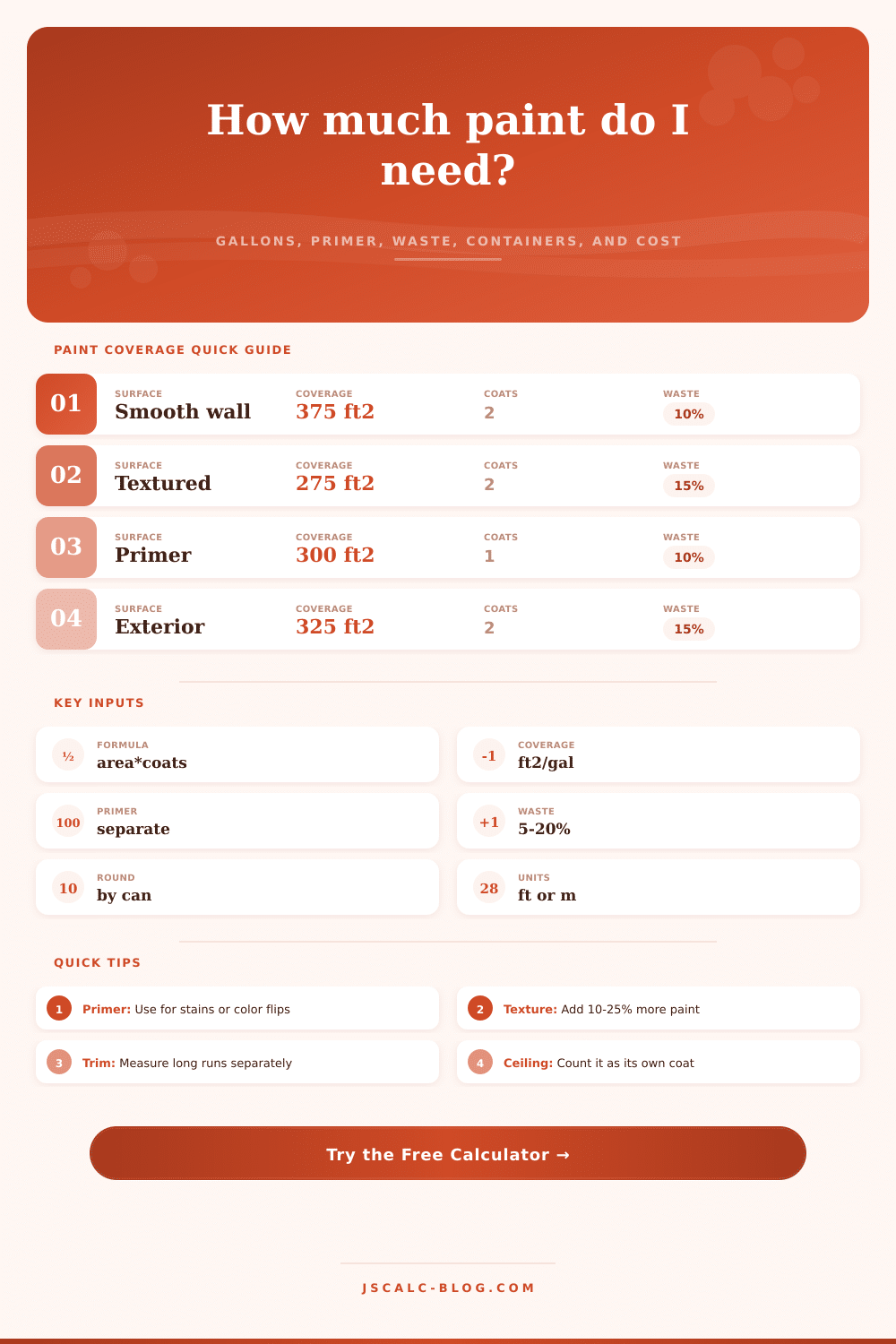
Most people thinks that every square foot of surface gets covered equally efficient. In reality, texture decreases coverage. Primer needs its own amount. Waste includes paint clinging to roller nap and overspray on the drop cloth. So if your surfaces is smooth (like new drywall), you’re going to get good coverage. Since the paint go on thinly and evenly, you will get a lot out of it: expect nearly four hundred square feet of coverage per gallon. Throw in a bit of a light orange-peel texture, and that drops down closer than two hundred seventy-five. This is because the peaks and valleys contains more pigment than flat surfaces do. This is helpful not just because it’s important to know what to believe when the calculator says buy another quart, but also because this info will help you stick to your budget, and keep your sanity.
Simple Tips to Paint Your Room
The other most misunderstood piece are primer. People skip primer for two reasons: Time and Money. They figure the top coat can does double duty. But that’s true only when you are refreshing a similar color on sound surface. If you paint over fresh joint compound, or refresh dark navy with soft gray, then not using primer is recipe for disaster. Because primer and finish paint have different rates of coverage, and serve different chemical purposes, the calculator breaks out the primer need from the finish paint need. Treat it like one pooled resource and you buys too little of everything. The walls will look cheap and translucent, which means you will need a third coat to fix them.
Remember the openings. For every normal-sized interior door, subtract twenty square feet. Big window? Another fifteen or so. Don’t go crazy and subtract hundreds of square feet if your room has tons of doors and/or windows. But don’t go nuts either, leave it in the equation if your windows are small (and you plan to paint them) or if your trim is narrow and you want to tackle it too. Buying one more quart is better than making a second trip to the store while your arm is sore and clock is screaming at you for bed time.
It’s probably the easiest-to-understand input (yet the most commonly overlooked); the waste allowance input. It may only take a little bit more, say five percent, if you’re doing a careful paint job in an average-sized room with some minor touch-up requirements. On the other hand, a highly-textured interior or siding could easily absorbs 15-20% more. This is because the texture absorbs irregularly and there is also some drip and wind involved.
Rounding up to the next whole number based off how many gallons per container you choose matches reality: you can’t purchase two point three gallons. You purchase three. That way you wouldn’t of run out. And last but not least think about price breakdown. This way, you can see at-a-glance if you’d like to splurge for high-hiding power paint or go with a more affordable brand. In most cases, the difference in price comes from application and durability, rather than first-time coverage.
Now that you’ve got these figures, there’s no guessing anymore. There’s only planning. Head into the store confidently, pick out exactly what you’ll use, and put the guesswork away. Your walls will look great, and you will too.