Car Loan Amortization Calculator
Estimate your monthly auto payment and full payoff schedule from vehicle price, down payment, trade-in value, negative equity, sales tax, APR, term in months, and optional extra principal.
🎯Real Car Loan Presets
📝Vehicle & Loan Inputs
If you owe more than the trade is worth, the difference (negative equity) rolls into the new loan.
Optional fees financed into the loan (title, doc, registration).
Extra amount applied straight to principal each month.
🔢Formula Snapshot
📊Amortization Schedule Highlights
| Payment # | Month | Payment | Principal | Interest | Extra | Balance |
|---|---|---|---|---|---|---|
| Enter values above to build your amortization schedule. | ||||||
| Year | Payments | Principal Paid | Interest Paid | Extra Paid | Ending Balance |
|---|---|---|---|---|---|
| The yearly summary appears after calculation. | |||||
⚖Loan Term Comparison
| Term | Monthly Payment | Total Interest | Total Paid | vs 60 Months |
|---|---|---|---|---|
| A 36 / 48 / 60 / 72 month payment comparison appears here. | ||||
🗂Auto Loan Scenario Grid
| Scenario | Price | Down | Trade | Tax | APR | Term |
|---|---|---|---|---|---|---|
| New sedan | $30,000 | $3,000 | $0 | 6.0% | 7.00% | 60 mo |
| Budget stretch | $25,000 | $1,000 | $0 | 6.5% | 8.50% | 72 mo |
| Trade-in buyer | $34,000 | $2,000 | $8,000 | 6.0% | 6.90% | 60 mo |
| Certified used | $22,000 | $2,500 | $0 | 7.0% | 5.90% | 60 mo |
| 0% promo new | $28,000 | $4,000 | $0 | 6.25% | 0.00% | 48 mo |
| Full-size truck | $45,000 | $5,000 | $0 | 6.5% | 7.40% | 72 mo |
| Upside-down trade | $29,000 | $0 | $6,000 | 6.0% | 8.90% | 72 mo |
| Fast payoff | $27,000 | $4,000 | $0 | 6.0% | 6.50% | 48 mo |
⚙Full Formula Breakdown
📋Tax, Fees & Rate Reference
| Item | Typical Range | How It Is Used | Effect on Loan |
|---|---|---|---|
| Sales tax | 0% to 9.5% | Taxable amount × rate | Raises amount financed and interest |
| Trade-in credit | $0 to vehicle value | Cuts taxable amount and P | Lowers tax and monthly payment |
| Doc & title fees | $100 to $900 | Financed into the loan | Small increase to principal |
| New car APR | 6% to 8% | Sets monthly rate r | Drives total interest cost |
| Used car APR | 8% to 12% | Higher r than new | Much larger interest total |
| Extra payment | $25 to $300 monthly | Applied to principal | Shortens payoff, saves interest |
💡Smart Auto Financing Tips
Purchasing a new car sounds easy: You go to dealership, choose the car, negotiate price, and then hand them some paperwork with a payment amount scrawled across the top. The number looks reasonable. Most people leave thinking they got a good deal because the payment went down. In reality, they just stretched out the payment schedule and agreed to pay more. They just get to keep the cash in their pocket today. That monthly payment is rarely the entire picture.
The interest rate is hidden. Fees are buried. And oftentimes, what you’re trading in actualy affects what you owe and can even lower your taxable amount. After you input all this information about your car, the calculator do all the math for you. Since you’re reading tech blogs, I don’t need to tell you how tedious plugging stuff into things can be. There is no more guessing at conversion factors or coefficients. It turns those unpleasant variables, like documentary fees, negative equity from a previous auto loan, and basis of sales taxes, into something easy to understand: a complete picture of how much money you’ll spend.
How to Calculate Your True Car Cost
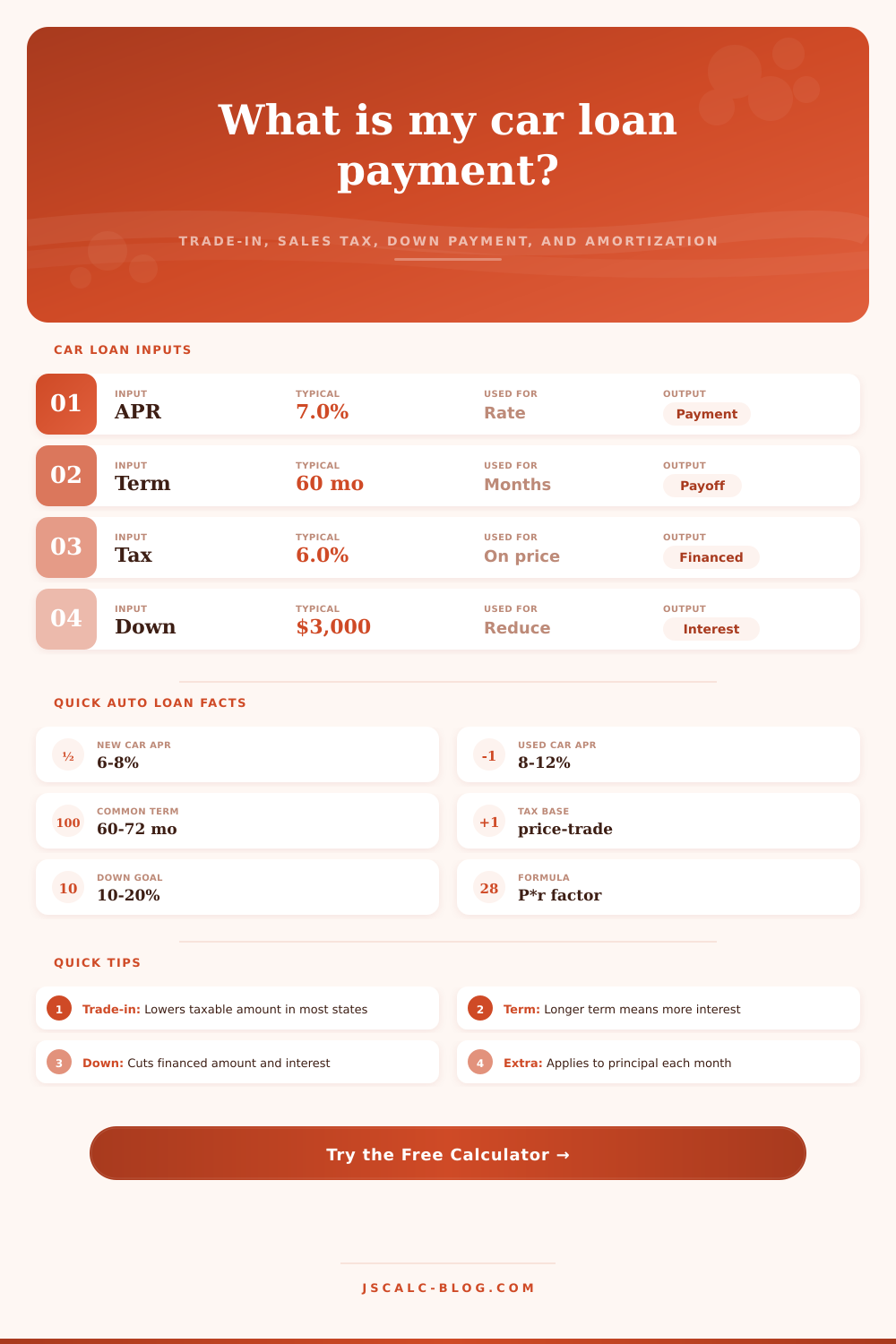
Understanding what exactly you’re trying to measure is key to pulling off this trick. Yes, you’re financing the sticker price. But you’re also financing the sticker price plus tax plus fees minus any credit or cash you bring to table. Neglect that last part and you’ll underestimate your costs by more then a lot. Here’s why: if sales tax is included in principal, then it gets charged before interest begins accruing. People make mistake of treating sales tax as an additional separate charge, one they has to write a check for. In reality, it’s typically rolled into amount financed in most loans.
Another wrinkle few shoppers consider are their trade-in. In many states, you only pay sales tax on the difference between new car’s price and your trade-in’s value. So if you’ve got a great trade, it will reduce your monthly payment. It also reduces the taxable portion of the deal, growing your savings throughout the time you spend driving. That’s why the tool let you toggle between full- and net-price tax bases.
Got negative equity on a prior purchase? That debt gets rolled into principal on the new loan. At that point, you’re literally paying interest on a car you don’t own, just so you can afford driving the one you do. It’s a vicious cycle: Every month, you’re paying off someone else’s interest before touching your new-car costs.
Interest rates is less important than many believe, unless you consider each number in a vacuum. Even at a low APR, if you’re paying down a large principal, you could end up paying thousands in interest during a five- or six-year period. It may save you a hundred bucks per month to extend a loan from sixty months to seventy-two months, but it will cost you an additional two years worth of interest payments, and keep you underwater longer. Being underwater refers to being in debt above the value of vehicle. That’s a bad place to be if life throws you a curveball and you need to trade in early, or even just sell. When is that crossover point? The amortization schedule shows all.
And then, there are extra monthly payments. Any extra payment you make toward principal will shave months (and hundreds in interest) off your payoff date, even a small one. This is for good reason. When you apply any additional dollars toward principal, you’re reducing the base on which future interest is calculated. Think about it like a little snowball effect; the closer you get to the finish line, the faster it grows. Most lenders won’t penalize you for using this. If you ignore it, you would of leaving free money on the table.
This shows up in the reference table at the bottom of the page, which compares various terms next to each other. As you’ll notice, shorter loans has lower payments (e.g., forty-eight months), but kill interest faster. This creates a trade-off: more immediate cash for less wealth later. For most driver, we recommend the minimum term you’re able to pay comfortabley. “Comfortable” is defined as having a payment that dissapears from your brain once you click send on your bank app. If you’re sweating about making this month’s payment, then price is too high or the term is too long.
In short, once that baby leaves the lot, it becomes a liability. Every day its worth decreases. You’re not trying to achieve smallest monthly payment. You’re trying to get the most money for as little money out-of-pocket over time. Take into account total cost column, not only the monthly. Seeing the numbers this way will alter your mindset and change every figure on the spreadsheet.